
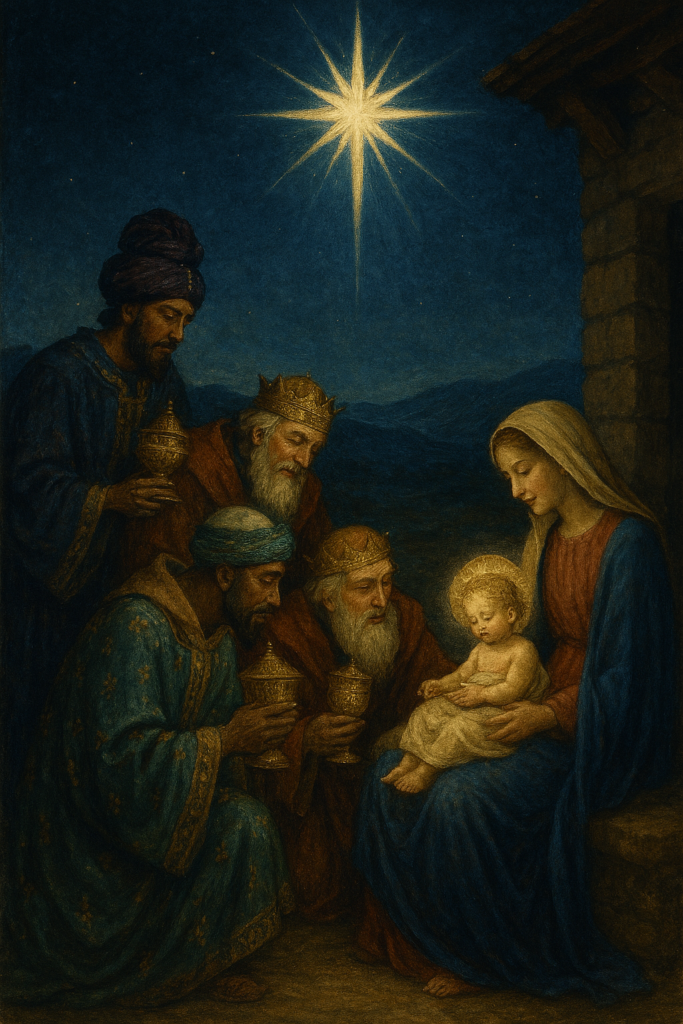
Epiphany, celebrated on January 6, marks the revelation of Jesus Christ to the Gentiles, symbolized by the visit of the Three Wise Men (Magi) to the infant Jesus. The term “Epiphany” means manifestation or appearance, highlighting Christ’s unveiling as Savior to all nations—not just Israel.
Biblical Roots:
- Found in Matthew 2:1–12, the Magi follow the Star of Bethlehem to honor the newborn King with gifts of gold, frankincense, and myrrh.
Bible Gateway – Matthew 2:1–12 - In Eastern Christianity, Epiphany (called Theophany) also commemorates Jesus’ baptism in the Jordan River.
Bible Gateway – Matthew 3:13–17
Historical Significance: - In the early Church, Epiphany was a major feast encompassing Jesus’ birth, baptism, and first miracle at Cana.
Catholic Encyclopedia – Epiphany - Western traditions emphasize the Magi’s visit, while Eastern rites highlight baptism.
Orthodox Church in America – Theophany
Traditions Around the World: - Blessing of homes with chalk inscriptions (e.g., 20+C+M+B+26).
USCCB – Epiphany Customs - Processions, gift-giving, and special pastries like Rosca de Reyes.
National Geographic – Three Kings Day - Liturgical celebrations often moved to the nearest Sunday for convenience.
Vatican News – Epiphany
Epiphany reminds us that Christ’s light reaches beyond borders, welcoming all who seek Him.