

Historical Background
The feast originated in the 13th century through the visions of St. Juliana of Liège, who advocated for a special feast to honor the Blessed Sacrament. Pope Urban IV instituted the universal celebration in 1264, commissioning St. Thomas Aquinas to compose hymns such as Pange Lingua and Tantum Ergo catholicbibleonline.com+2. The Miracle of Bolsena in 1263, where a consecrated Host bled during Mass, further affirmed the feast’s significance and inspired its universal observance catholicbibleonline.com+1.
Corpus Christi is marked by several liturgical and cultural practices:
Masses and Eucharistic Adoration: Special solemn Masses focus on the mystery of transubstantiation, often followed by periods of silent prayer before the Blessed Sacrament christianityinfo.com+2.
- Eucharistic Processions: The consecrated Host is displayed in a monstrance and carried through streets, symbolizing Christ’s presence and blessing the community thegodmessage.com+2.
- Cultural Traditions: In countries like Poland, Spain, and Brazil, flower carpets, music, and public processions enhance the celebration thegodmessage.com.
- Prayers and Hymns: Devotional prayers, including those by St. Thomas Aquinas, and hymns like Lauda Sion and Adoro Te Devote, are integral to the feast catholicbibleonline.com+1.
In 2026, the Feast of Corpus Christi is celebrated on Thursday, June 4, but in many countries, including the United States, it is observed on Sunday, June 7.
The traditional date for Corpus Christi in 2026 is Thursday, June 4, which is the Thursday after Trinity Sunday, itself the Sunday following Pentecost. Many dioceses transfer the celebration to the following Sunday, June 7, 2026, to allow greater participation by the faithful christianityinfo.com+3.
Meaning and Significance
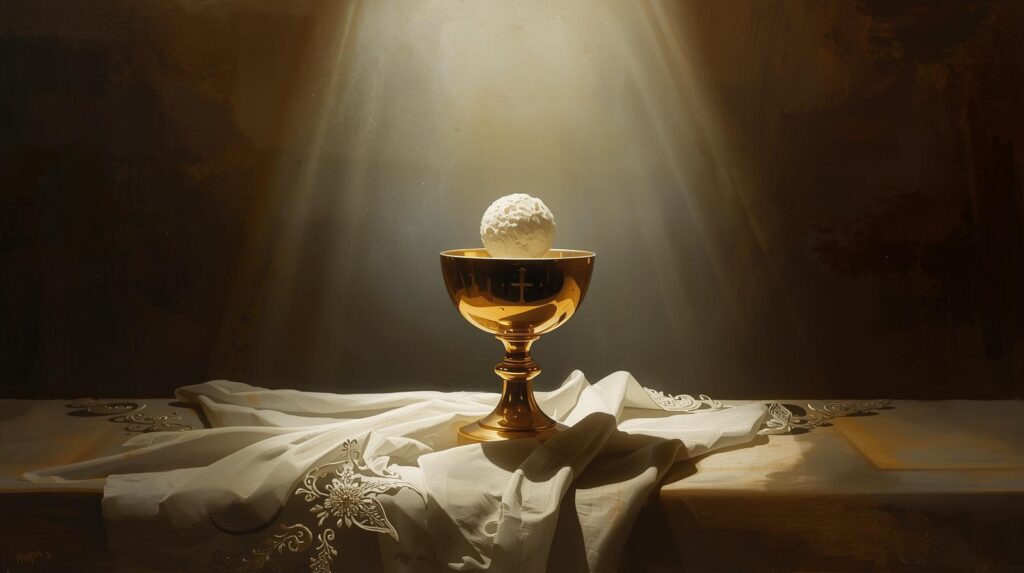
Corpus Christi, Latin for “Body of Christ,” is a solemnity that celebrates the Real Presence of Jesus Christ in the Eucharist—His body, blood, soul, and divinity truly present under the appearances of bread and wine christianityinfo.com+2. Unlike Holy Thursday, which commemorates the institution of the Eucharist within the context of Christ’s Passion, Corpus Christi provides a dedicated day to honor the Eucharist with joy and public devotion christianityinfo.com+1.
Historical Background
The feast originated in the 13th century through the visions of St. Juliana of Liège, who advocated for a special feast to honor the Blessed Sacrament. Pope Urban IV instituted the universal celebration in 1264, commissioning St. Thomas Aquinas to compose hymns such as Pange Lingua and Tantum Ergo catholicbibleonline.com+2. The Miracle of Bolsena in 1263, where a consecrated Host bled during Mass, further affirmed the feast’s significance and inspired its universal observance catholicbibleonline.com+1.
Spiritual Significance
The feast emphasizes that the Eucharist is not merely symbolic but the true presence of Christ, offering spiritual nourishment, unity, and a reminder of God’s enduring love thegodmessage.com+2. It invites the faithful to deepen their devotion through Mass, adoration, and acts of kindness, reflecting Christ’s presence in daily life.